Guides
An honest review of virtual assistant agency bookkeeping
Virtual assistant agency bookkeeping and cash flow: a nine-step monthly close, the timing gap that catches retainer businesses, and what to track per client.
What to take away
- Retainers invoice ahead, which hides a cash problem until you add project work or overage billing. Then the gap between paying your team and being paid arrives all at once.
- Run the same close every month, in the same order. Nine steps, an hour or two, and it removes almost all year-end reconstruction.
- Code every invoice to a service line. Without it, no question about which work earns can ever be answered.
- Read cash, not revenue. A signed retainer is not money, and payroll does not wait for an invoice to clear.
No amounts, rates or thresholds are stated here. Where a requirement exists, the body that publishes it is named.
The cash shape of a retainer business
Your costs are attached to capacity. You owe your team for the month whether or not clients send work, and you owe it on a fixed date.
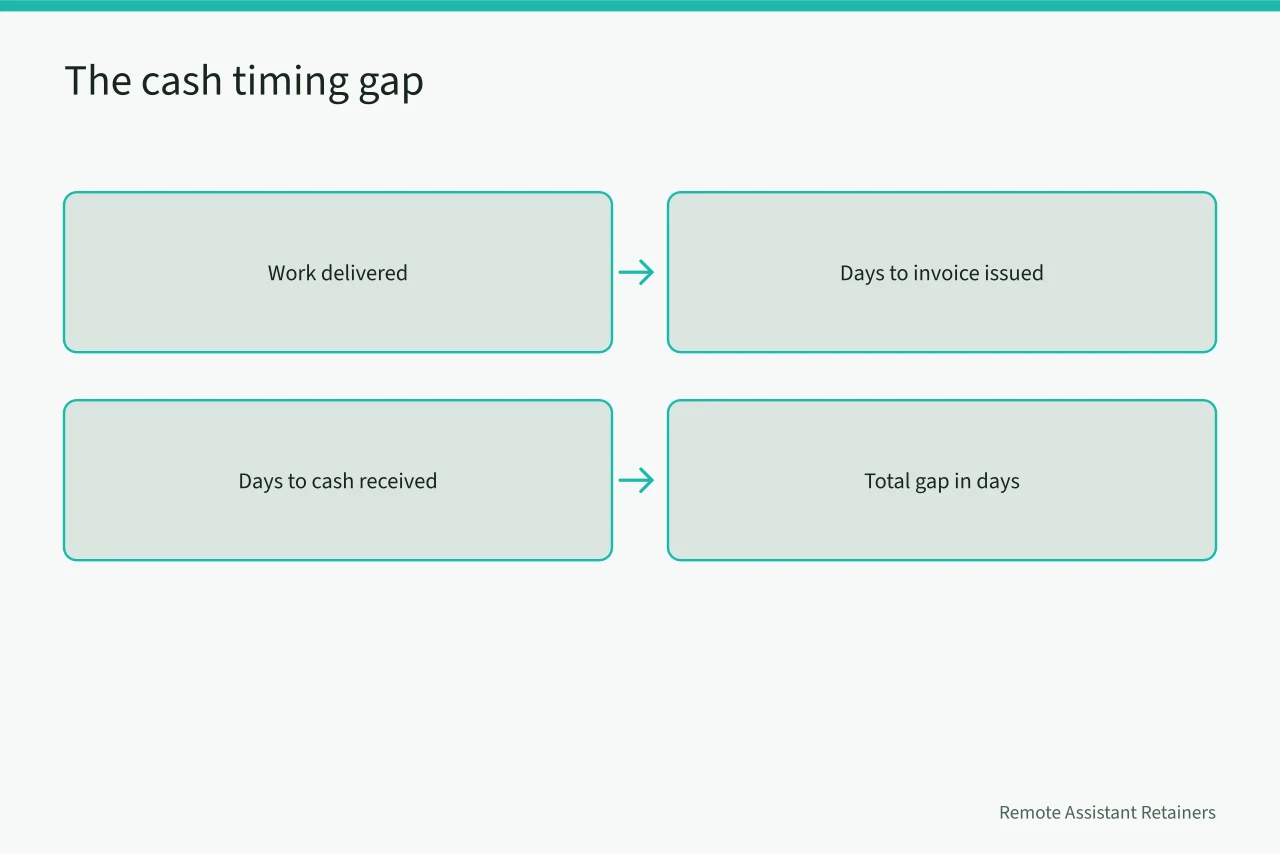
Your income has two shapes. Retainers billed in advance, which are the friendly kind. And anything billed after delivery, overage, project work, setup, which creates the gap.
Measure the gap in days: days from work delivered to invoice issued, plus days from invoice issued to cash received. The first half is entirely within your control and it is usually the larger of the two.
Invoicing on the day work is delivered rather than at month end costs nothing and is often worth more than any financing arrangement. Faster invoicing only helps if the price list already covers the cost of the capacity you reserved.
The nine-step monthly close
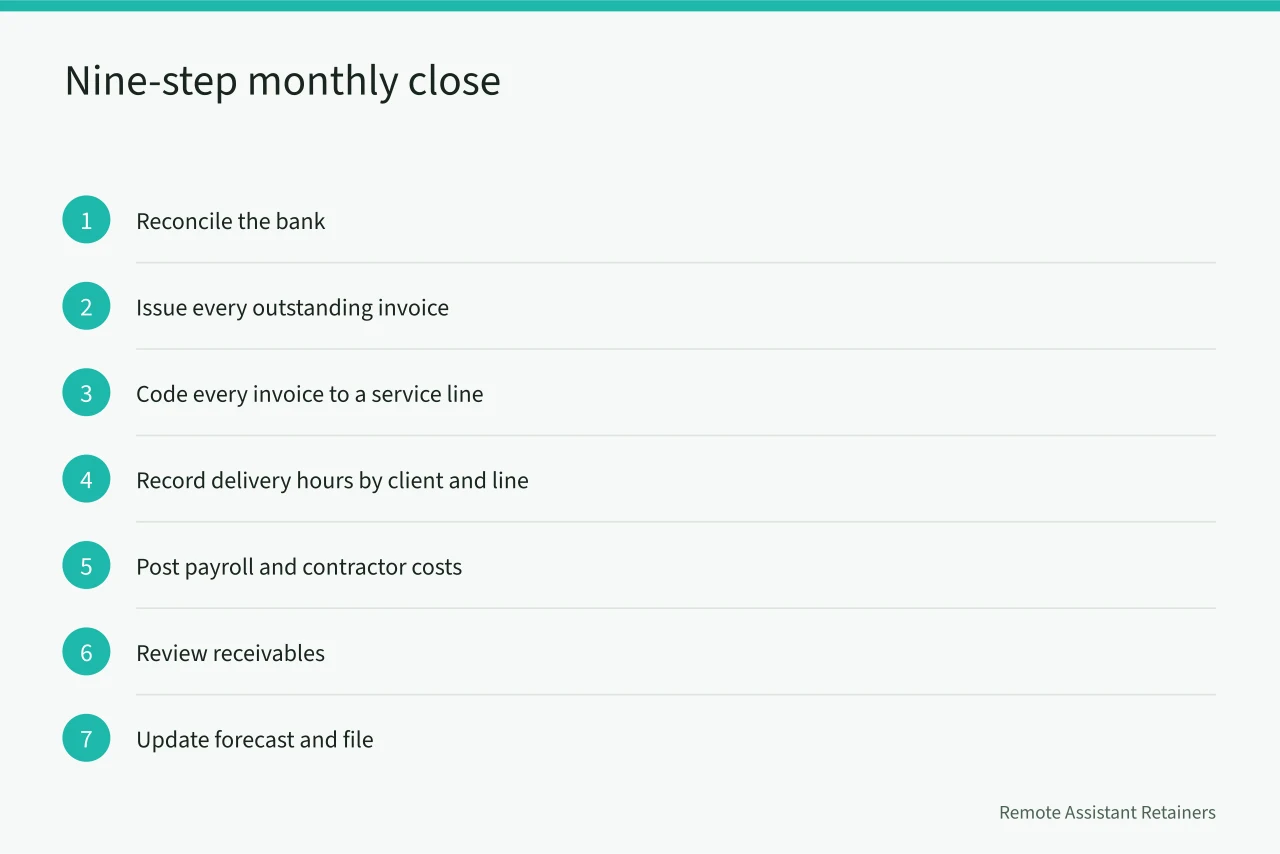
Nine steps in five clusters. The clusters are what the close is for; the steps are how you get there.
| Steps | What they produce | What happens if skipped |
|---|---|---|
| Reconcile and invoice | A complete, current picture of what is owed | Revenue delivered and never billed |
| Code to service lines | The ability to answer which work earns | Opinions instead of measurements |
| Post costs and hours | A cost side that matches the revenue side | Margin that cannot be attributed |
| Receivables and forecast | Three months of visibility on cash | Hiring decisions made on invoiced revenue |
| File and write two sentences | A close that changes something | A filing exercise |
Do these in order, on the same day each month.
- Reconcile the bank. Every line matched. Unmatched lines are where errors live.
- Issue every outstanding invoice. Including overage and anything delivered outside the retainer that was agreed in writing.
- Code every invoice to a service line. One code per line. This is the step everybody skips and the one that makes profitability answerable.
- Record delivery hours by client and by line. From the time records, not from memory.
- Post payroll and contractor costs, with the same service-line coding where the work was line-specific.
- Review receivables. Anything past terms gets a message this week, not next month.
- Update the cash forecast for the next three months: committed costs, expected collections, known one-offs.
- File the month's records so they are retrievable without searching a mailbox.
- Write two sentences on what changed and what you will do about it.
The ninth step is what turns bookkeeping into management. Without it the close is a filing exercise.
What has to be kept, and for how long
This is not a matter of preference. The IRS guidance on which business records to keep sets out what a business needs to retain and be able to produce, and how long the obligation runs.
Two practical consequences for an agency. Records held only inside a tool you might leave are records you might lose, so exports belong in the close. And contractor or employment records carry their own retention expectations, which is a reason to keep the people file separate and complete rather than scattered through message threads.
Coding, and why it decides everything
A service-line code on every invoice and every hour is the whole difference between an agency that knows which work earns and one that has opinions.
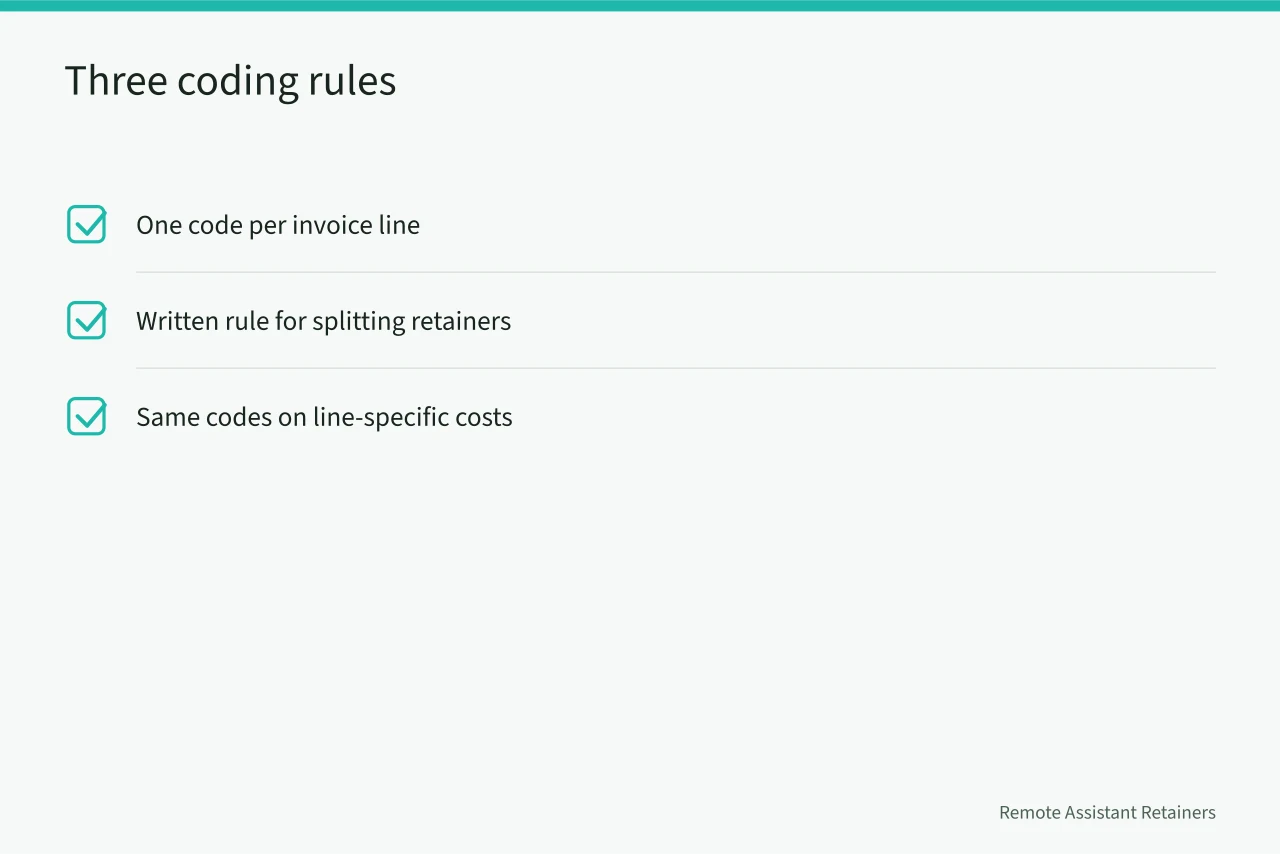
Three rules make it hold.
- One code per invoice line, never a mixed line.
- A written rule for splitting a retainer that covers several lines, applied identically every month.
- The same codes on cost entries where the cost was line-specific.
Six months of consistent coding will tell you more about your business than any benchmark you could look up.
Protecting the money and the access
An agency holding client financial access has a specific exposure, and payment fraud in small businesses usually arrives through a message rather than through a system.
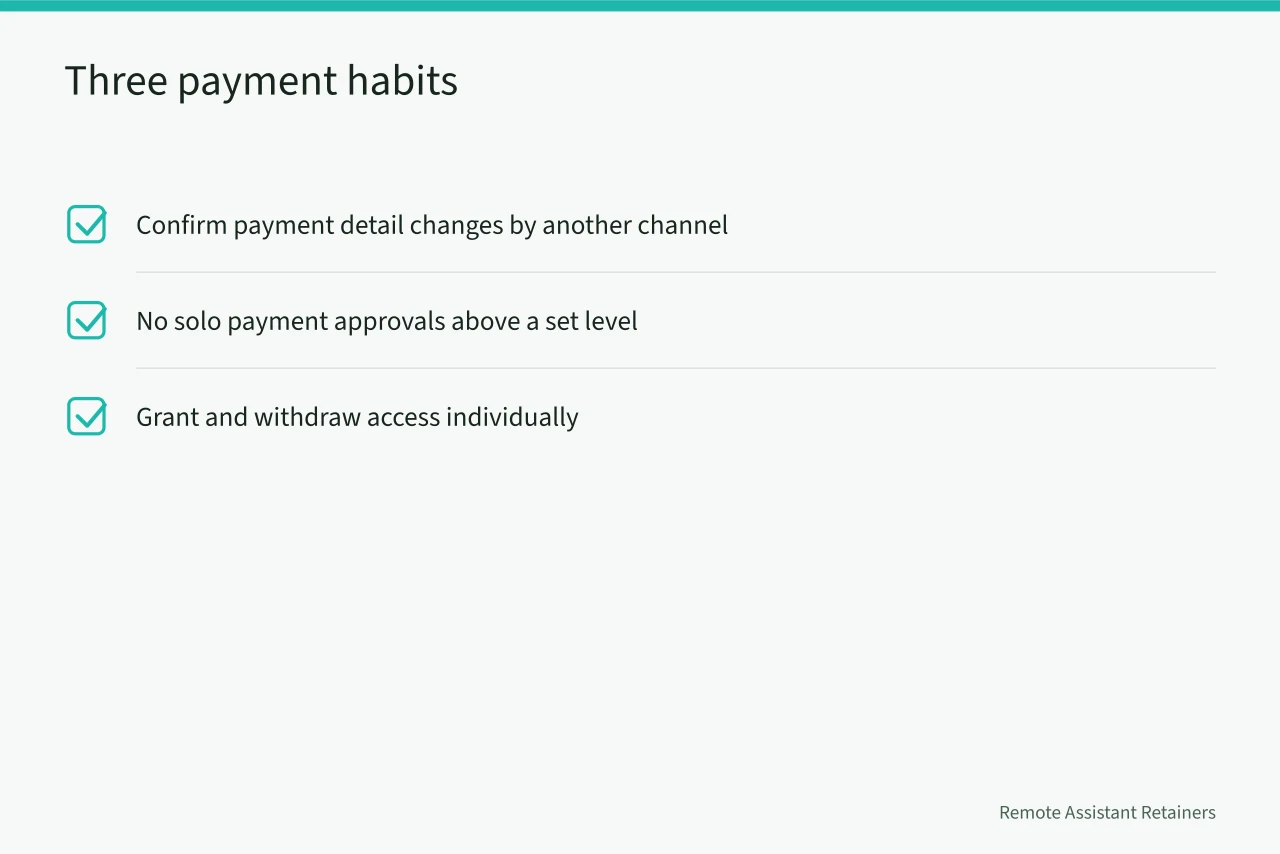
Three habits. Payment detail changes are confirmed by a channel other than the one that requested them. Nobody approves a payment alone above a level you set in advance. And access to financial systems is granted individually and withdrawn the day somebody leaves.
Size the wider controls to what you can maintain. The NIST small business quick-start guides describe practices built for operations this small, and the CISA material for small and medium businesses covers the threat side. Both are short, and both are more useful than an elaborate policy nobody follows.
The three cash questions worth asking monthly
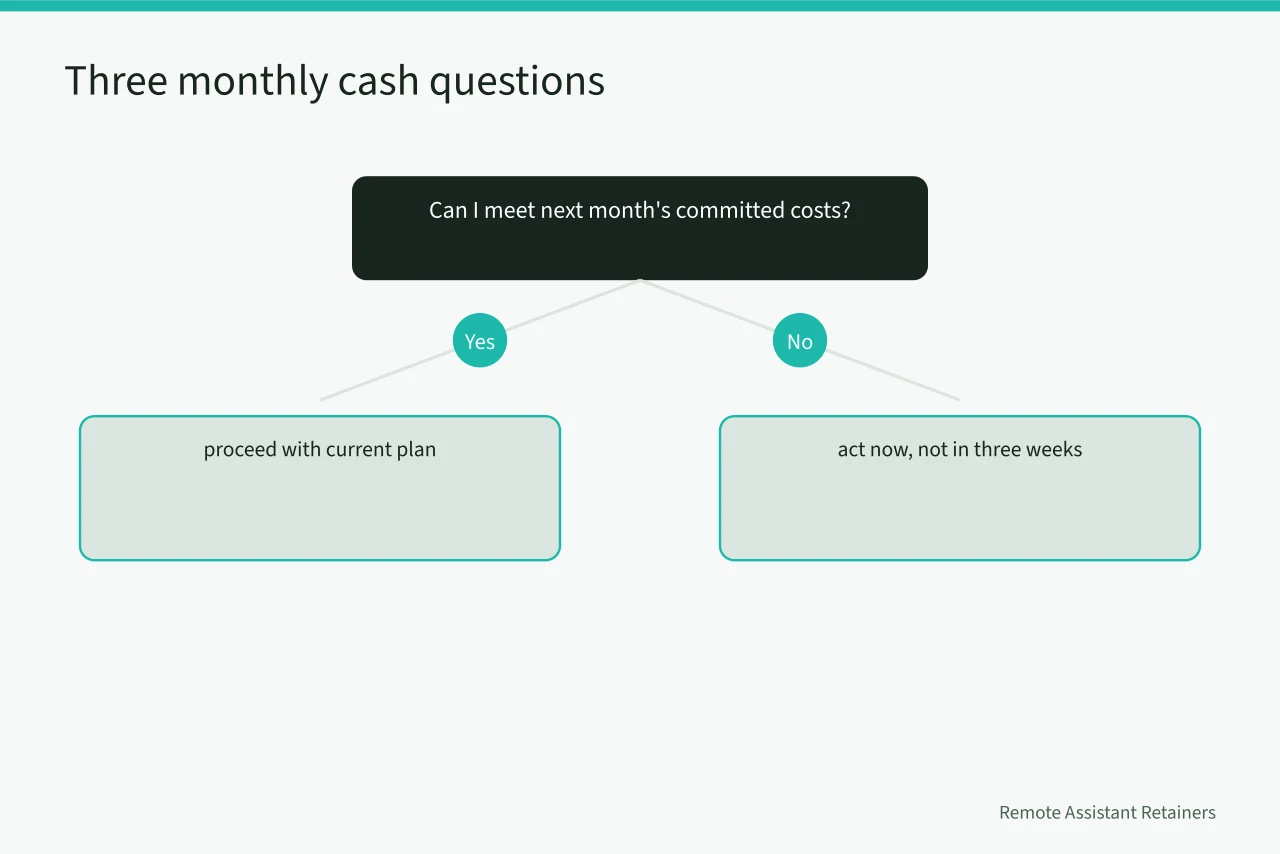
Can I meet next month's committed costs from cash on hand plus expected collections? If the answer is no, act now rather than in three weeks.
What happens if the largest client pays late? Recompute. Concentration is the risk that turns a manageable delay into an emergency.
What happens if one assistant is replaced? Recruiting time, unproductive weeks, and a gap in delivered capacity all land at once. The cost components behind that are set out in the guide to agency pay rates and labor costs.
Three answers, written down, once a month. That is a cash forecast that does something.
When to bring in help
Do the coding yourself and hand the compliance work to somebody qualified.
The reason is not difficulty. It is that the coding is where the management information comes from, and delegating it means delegating your understanding of which work earns. Everything else, filings, classifications, year-end, is better done by somebody who does it constantly.
A bookkeeper who does not know your service lines will code everything to one bucket, so give them the rule rather than expecting them to invent it. Which lines exist in the first place, and what each one is meant to produce, follows the training and delivery structure in the hiring and training guide.
What the numbers should change
Bookkeeping that never changes a decision is filing.
The two decisions it should change most often are which service lines get sold harder, and when you can afford to hire. The first depends on coding; the second depends on cash rather than revenue, and getting that distinction wrong is how agencies hire a month too early.
Where the measures live and how they get reported is covered in the software and KPI guide for agency owners, and the demand side that has to justify any hire is in the marketing and growth guide.
Common questions
Cash or accrual?
That is a question for a qualified accountant in your jurisdiction, and it depends on your size and structure. Whichever applies, keep a cash view alongside it, because payroll is paid in cash.
How much reserve should I hold?
Nobody can give you that figure. Model it instead: committed costs for the months it would take to replace your largest client, and decide what you are comfortable with.
Should I bill retainers in advance?
It is the natural shape for reserved capacity and it removes most of the timing gap. Say plainly in the agreement what happens if a client pauses mid-term.
When do I need a bookkeeper?
When the close is being skipped. The first missed month is the signal, not the tenth.